German Orientalist
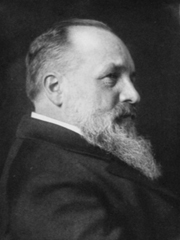
Karl Eduard Sachau 1845 – 1930 was a German orientalist.
Sachau became professor extraordinary 1869 and full professor 1872 at the University of Vienna, and in 1876, professor at the University of Berlin, where he was appointed director of the new Seminar of Oriental languages in 1887.
He travelled to the Near East on several occasions (see his book 'Reise in Syrien undMesopotamien' published 1883).
He is especially noteworthy for his work on Syriac and other Aramaic dialects.
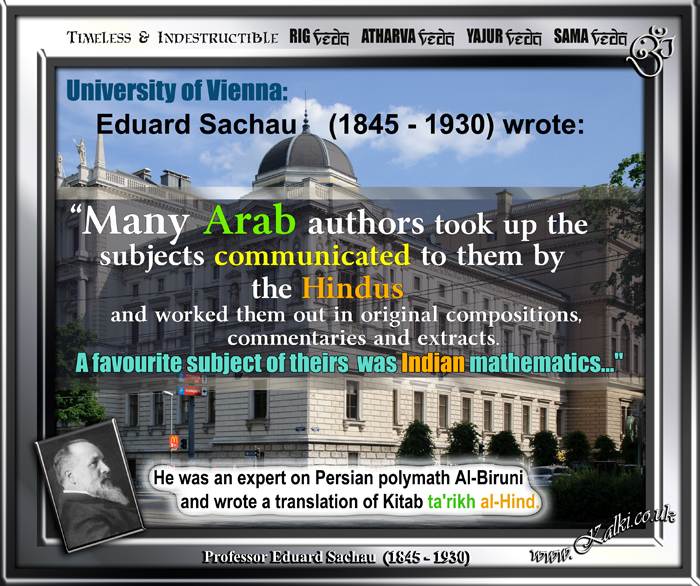
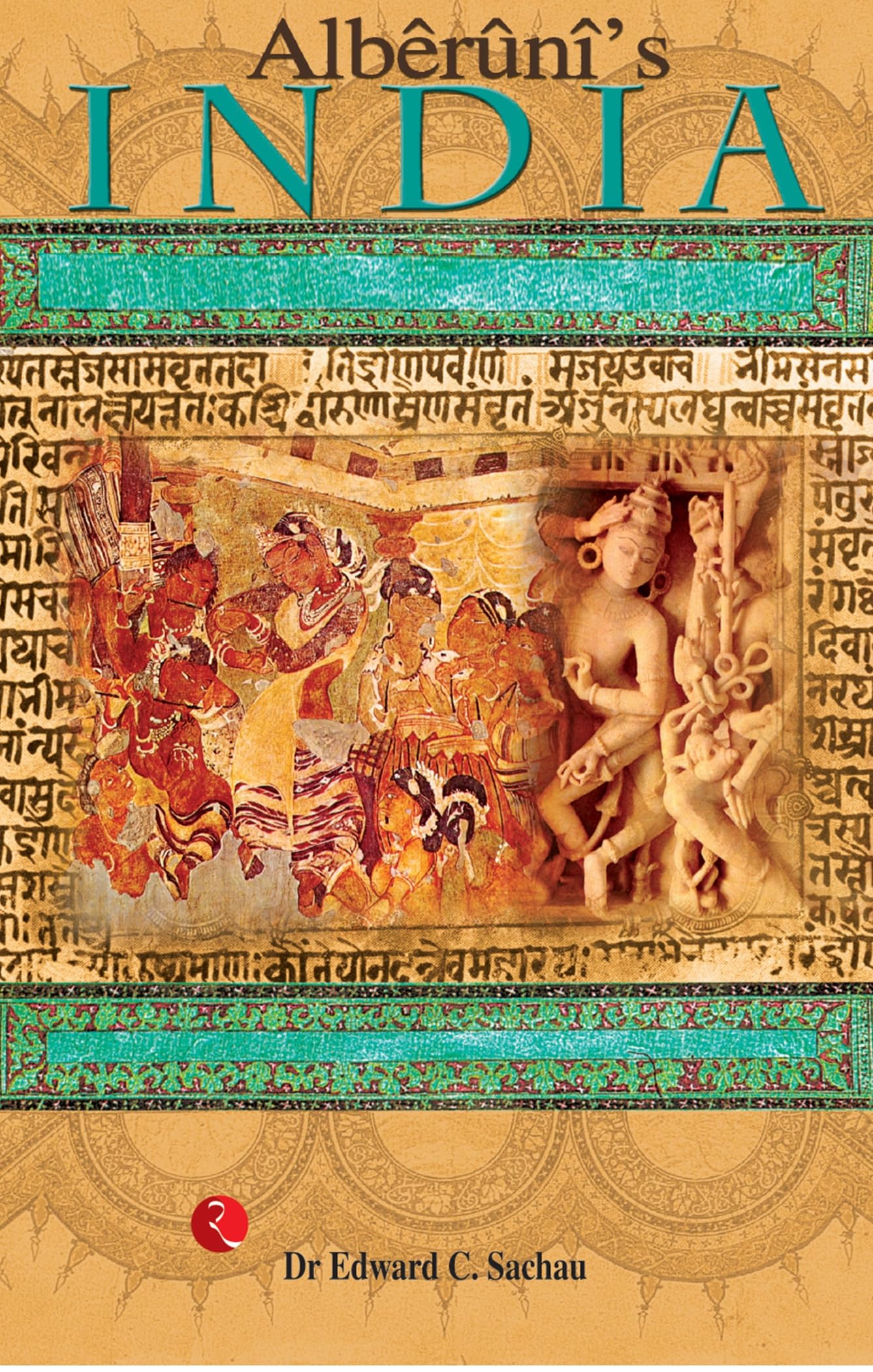
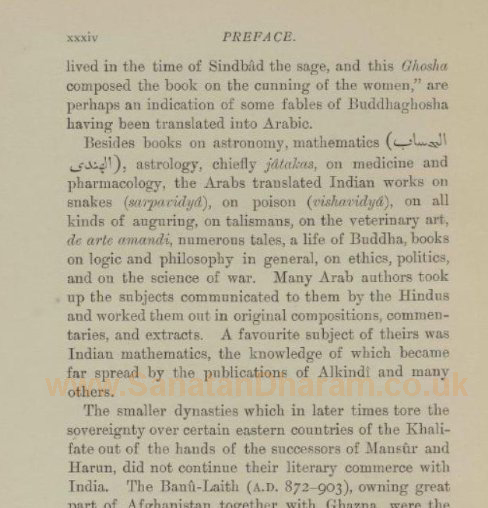
He was an expert on Al-Biruni and wrote a translation of Kitab al Hind which describes among other things Hindu-Arabic numerals.
He was a foundational figure in German oriental studies, directing the Seminar of Oriental Languages in Berlin and advancing knowledge of Near Eastern history, language, and culture.
Key aspects of Sachau’s career and work:
Scholarly Focus: He was a leading expert in Syriac and Aramaic dialects.
Al-Biruni Scholarship: Sachau is highly regarded for his translation and critical work on the Persian polymath Al-Biruni, particularly the Kitab ta'rikh al-Hind (Al-Biruni's India).
Travel and Research: He conducted significant research in the Near East, documented in his publication Reise in Syrien und Mesopotamien (1883).
Institutional Roles: He was a member of the Prussian and Vienna Academies of Sciences and acted as a consultant for the Baghdad Railway project.
His work helped define German oriental studies in the late 19th and early 20th centuries, bridging specialized philology with broader studies of Oriental history.
Research on Ibadism
Eduard Sachau's research on Ibadism focused on the doctrines, legal practices, and historical narratives of Ibadi Muslim communities in East Africa and Oman, drawing from rare manuscripts and local sources to illuminate their distinct theological and jurisprudential positions. His work highlighted the Ibadis' divergences from mainstream Sunni and Shia Islam, particularly in areas like inheritance law and religious beliefs, based on philological analysis of Arabic texts from Zanzibar and Omanitraditions.
In 1894, Sachau published "Muhammedanisches Erbrecht nach der Lehre der ibaditischen Araber von Zanzibar undOstafrika," a detailed study of Ibadi inheritance rules derived from East African sources. The paper translates and analyzes chapters on inheritance from al-Mukhtasar by the Ibadi jurist al-Basiwi (d. 1323/1905), a key text of Ibadi fiqh compiled in Zanzibar around 1886. Sachau's examination reveals how Ibadi law emphasizes agnatic principles alongside Qur'anic quotas, differing from Sunni schools in cases like the grandfather's exclusion of siblings and from Shia systems by rejecting non-agnatic proximity in heir classification. For instance, Ibadis include distant relatives (dhawu'l-arham) as residual heirs when agnates are absent, aligning with Hanafi and Hanbali views but contrasting with Maliki and Shafi'i exclusion of such kin in favor of the public treasury. He also notes impediments like religious differences, where inheritance is barred between Muslims and non-Muslims or across sects, with exceptions for patronage in manumission. These insights, grounded in manuscript evidence from Zanzibar, underscore Ibadism's blend of consensus-based and scripturalapproaches.
Building on this, Sachau's 1898 publications delved into Ibadi legal opinions and historical records from East Africa. In "Das Gutachten eines muhammedanischen Juristen über die muhammedanischen Rechtsverhältnisse in Ostafrika," he edited and translated a legal fatwa by the Ibadi scholar Yaḥyā ibn Khalafānal-Kharūṣī (d. 1312/1894), addressing practical Islamic law applications in Zanzibar's diverse society, including inter-sect relations and customary practices. Complementing this, "Über eine arabische Chronik aus Zanzibar" presents an Arabic manuscript chronicle obtained from Zanzibar around 1895, chronicling Ibadi imamate history and political events in East Africa from the 19th century. The text details the establishment of Ibadi governance under Omani influence, migrations of Ibadi scholars, and conflicts with Sunni rulers, providing primary evidence of Ibadism's adaptation in colonial contexts. Sachau's philological notes highlight the chronicle's value as a rare vernacular source for Ibadihistoriography.
Sachau's 1899 article, "Über die religiösen Anschauungen der ibaditischen Muhammedaner in Oman undOstafrika," synthesizes Ibadi theological views across these regions using manuscript collections. Drawing from doctrinal texts like creeds ('aqidas) and juristic commentaries, he analyzes Ibadism's moderate Kharijite roots, emphasizing communal election of imams, rejection of anthropomorphism in divine attributes, and tolerance toward non-Ibadi Muslims as "unbelievers of the fold" rather than outright apostates. Key divergences include the Ibadi classification of sinners into kufr (disbelief without enmity) and nifāq (hypocrisy), allowing peaceful coexistence unlike stricter Kharijite or some Sunni positions. Sachau contrasts this with Sunni Ash'arism and Shia Imamism, noting Ibadism's reliance on rationalist interpretation of scripture while maintaining anti-Umayyad historical narratives. His work, informed by his broader expertise in Semitic philology, relies on Omani and Zanzibari manuscripts to trace doctrinal continuity from early Ibadi scholars like Jābir ibn Zayd. These studies contributed to early European understanding of Ibadi communities in colonial contexts.