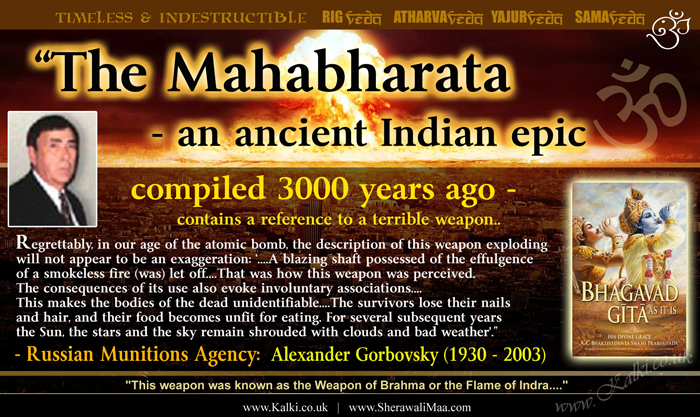
Russian Munitions Agency
Alexander Gorbovsky (1930 - 2003) Was an expert at the Russian Munitions Agency is a federal executive power body, providing the realization of state policies in the munitions industrial field, special chemistry and chemical disarmament.
Russian Munitions Agency performs the functions, earlier governed by the Ministry of Economy of the Russian Federation and abolished Committee on Conventional Problems of Chemical and Biological Weapons under the President of the Russian Federation.
Gorbovskyis recognized for his popular science books on historical enigmas, such as "Загадки древнейшей истории" (Riddles of Ancient History).
However, there is no evidence that he was an expert at a "Russian Munitions Agency"; he is primarily described in literature as an author and researcher of ancient history, not a defense sector employee.
Key details about Alexander Gorbovsky (1930–2003):
Background: Born in Kyiv, Ukrainian SSR, and died in London.
Work: Known for books and articles blending historical, scientific, and cultural research.
Publications: Included "Riddles of Ancient History" (Загадки древнейшей истории) and "Year 2000 and Beyond" (Год 2000 и далее).
Alternative Identification: Results indicate he is not affiliated with the Main Missile and Artillery Directorate (GRAU) or similar Russian munitions bodies.
Russian Munitions Agency and Committee Functions
The claim that the Russian Munitions Agency (RMA) assumed functions previously governed by the Ministry of Economy and abolished the Committee on Conventional Problems of Chemical and Biological Weapons under the President of the Russian Federation aligns with the restructuring of Russia’s chemical weapons program in the late 1990s and early 2000s.
Context: Following the 1997 ratification of the Chemical Weapons Convention (CWC),
Russia overhaulled its management of chemical stockpiles.
The Russian Munitions Agency became the civil body responsible for the destruction of chemical weapons, taking over duties that were previously split or managed by other entities.
Abolished Committee: The "Committee on Conventional Problems of Chemical and Biological Weapons" was replaced as part of this shift towards centralized destruction efforts.
There have also been stories regarding incredible levels of radiation among the bodies of those found at Mohenjo-daro.
Alexander Gorbovsky wrote in 1966 that the radioactivity in question was, in fact, as much as fifty times higher than average.
http://www.munition.gov.ru/eng/func.html
The Gorbovsky Claim (1966): , in his book Riddles of Ancient History, did report that a skeleton found at an ancient site had radioactivity 50 times higher than average. While often linked to Mohenjo-daro, some investigators suggest this claim originated from a misinterpretation of a study involving an Egyptian skeleton, not one from the Indus Valley.
The Radioactive Skeletons: Theory: Stories often claim that skeletons at Mohenjo-daro were found in the streets with high levels of radioactivity, comparable to Nagasaki or Hiroshima. However, no formal, peer-reviewed study has ever confirmed that radioactive skeletons were found atMohenjo-daro.
Source of the Myth: The theory was popularized by authors like Erich von Däniken and David Davenport in the 1960s-1970s. Davenport claimed that vitrified (melted) brick fragments indicated an ancient nuclear blast.
Scientific Findings: Mainstream archaeology and scientific studies have shown that the vitrified "black stones" found on the site were not the result of a massive blast, but rather a dumping ground for pottery waste that was vitrified in high-temperature kilns.
The Skeletons Found: While about 37 to 44 skeletons (depending on the report) were found, many were in locations suggesting improper or rushed burials rather than instant death in the streets. Studies also indicate these skeletons date from different, widely separated time periods, refuting the idea of a single, sudden catastrophe.
In summary, while Gorbovsky did write about radioactive skeletons, the claim that Mohenjo-daro was destroyed by a nuclear event that left high radiation levels is not supported by mainstream archaeological investigations.